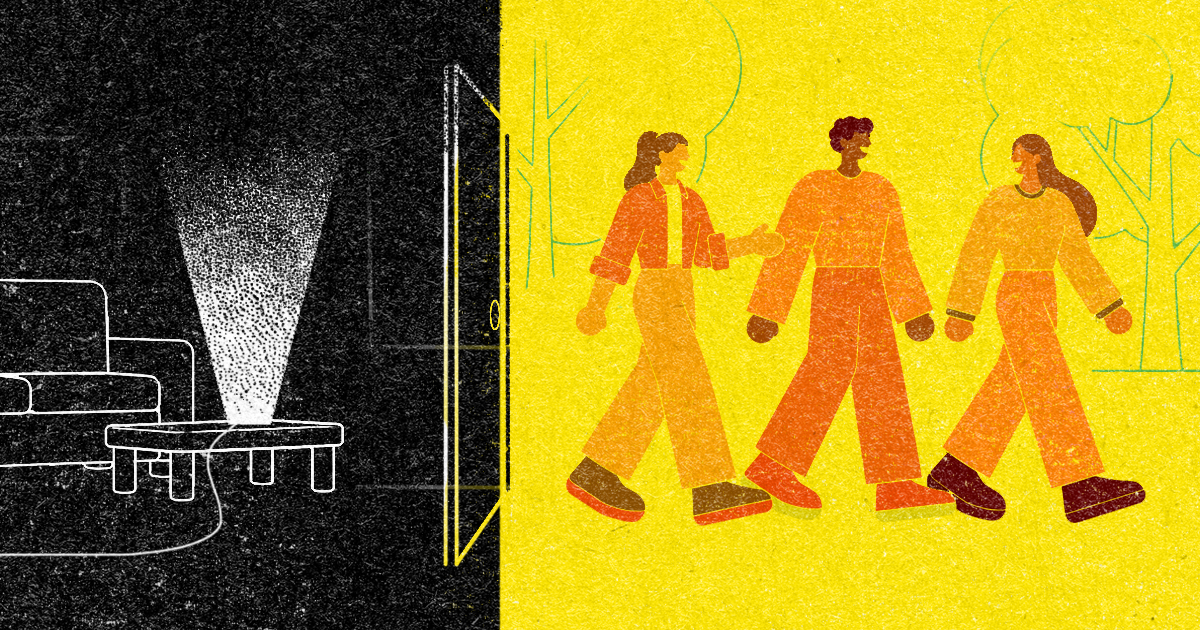

It's no secret that the world's top apps are designed to keep you hooked, and they're only getting more addictive. Screen Time on iPhone can help you limit usage, but sometimes, you need something that's more effective. Instead of relying on another app on your phone, some studies suggest that serious digital problems are best addressed with simple physical solutions.
From changing your screen's appearance to flipping how your notifications work, small physical hacks can help you build a healthy relationship with your phone. But the easiest hack, that you can try now, is keeping your phone out of reach. In fact, research suggests that physical distance between you and your phone may do more than just reduce your screen time— it could even make you smarter.
More Distance, Less Usage
In 2002, researchers decided to see what it would take to make secretaries eat more candy.
In the study "How visibility and convenience influence candy consumption," sixteen office secretaries were given candy in three different locations over three weeks. On week one, the candy container was placed on the subject's desk, where it was visible and easy to access. On week two, the candy was placed in the subject's desk drawer— not visible, but still within reach. On week three, the candy was visible but placed on a shelf two meters away, forcing subjects to leave their desks to get the candy. Guess which week resulted in the most candy consumption?
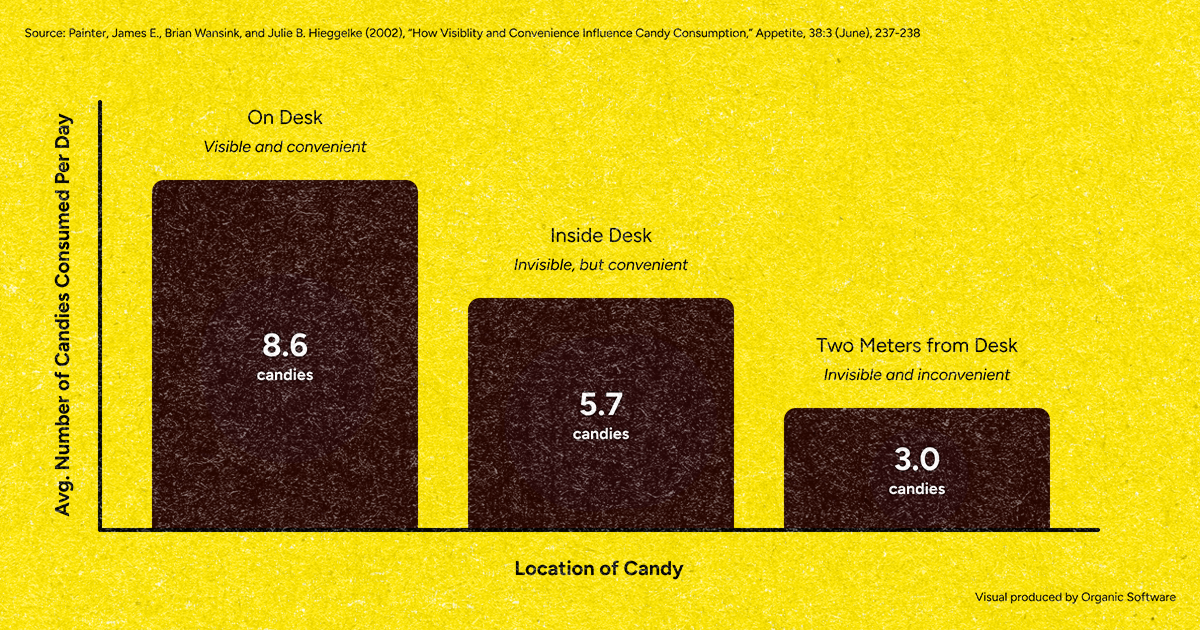
When the candy was easy to access, subjects consumed about three times more than they did when the candy was two meters away. There are some obvious differences between candy and smartphones, but the study does hint at one valuable idea: if you find yourself using your phone too often, the solution may be to place it out of sight and out of reach.
Research conducted in recent years (which did involve smartphones) support this idea, too. In fact, there may be evidence to suggest that your brain works better when you're further from your phone.
More Distance, More Focus
In 2017, over 500 undergraduates took part in an experiment that split them into three groups— just like the 2002 candy study. Every student was given tests to evaluate working memory and abstract reasoning; the only difference was where the students' phones were placed.
Group 1 was told to place their phones face-down on their desks. Group 2 was told to keep phones in their pockets or bags. Group 3 was told to put phones in another room entirely.
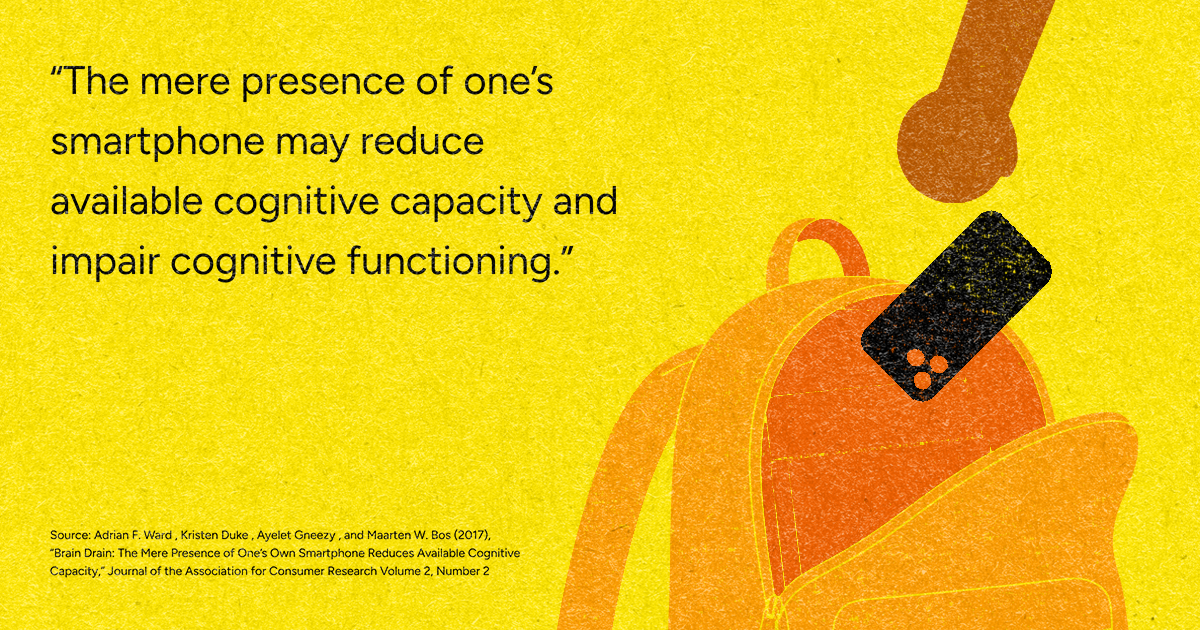
Students in Group 3— who were the furthest away from their phones— significantly outperformed Groups 1 and 2 on the tests. Researchers stated that "...the mere presence of one’s smartphone may reduce available cognitive capacity and impair cognitive functioning."
Your phone may be slowing you down even when it isn't being used; when it's out of reach, you may reap benefits beyond less screen time.
Distance, But Digital
If you're not ready to put your phone away entirely, you can start by adding some deliberate digital friction to curb your usage. If an app you use too often is placed on your home screen, remove it so it takes more effort to open. Sign out of the app when you're done using it so your future self is forced to log back in. Delete the app altogether to make it even harder to use again.
Think of these techniques as simple ways to create "digital distance." By adding friction that interrupts the instant dopamine loop— the core mechanism that addictive apps rely on— you're reclaiming control over your time and attention. You're giving yourself room to consider whether what you're about to do is what you want to do.
As technology become more captivating, forming healthy relationships with our devices becomes more urgent and important. When digital solutions aren't enough, smart IRL hacks can help. Products like Brick are built on this idea, and users have shared how effective it can be when Screen Time, app limits, and sheer force of will don't cut it. But you don't need a new product to drive more positive change in your life. The simplest step— that you can take now— is to put your phone somewhere far.